
Birding in Bannerghatta
October 15, 2007
First, let me start with a nice picture:
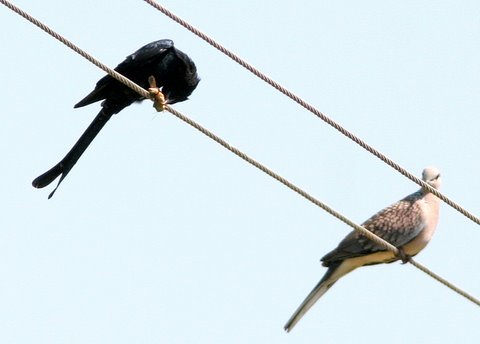
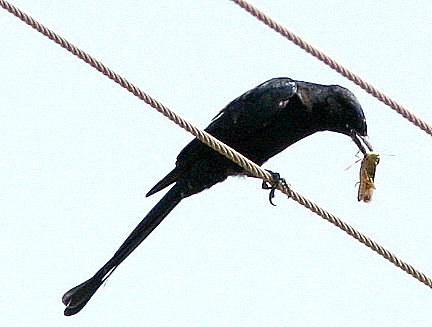
Here’s a black drongo which has caught a grasshopper and is busy despatching it; on the other side, a spotted dove seems to say, “Old greedy-guts, can’t you share your breakfast?”
We took our cue from the dove’s question and shared a great breakfast at the end of the outing…
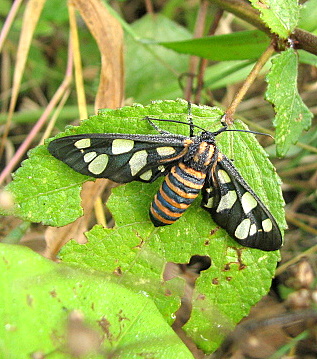
 Several of us poked around the bushes in the ditch, much to the amusement of the locals...but the search yielded treasures like this moth...none of us knew the name so we are officially calling this the SPOTTED-WING MOTH; Update: Madhusmita, our NTP non-resident fruit-fly researcher, who always helps out with other insects, too, says, this is probably a YELLOW-BANDED WASP MOTH. ( I *knew* this would happen. Now I am going to say every insect is a beewaspmothbutterflygrasshoppercricket and be done with it!)
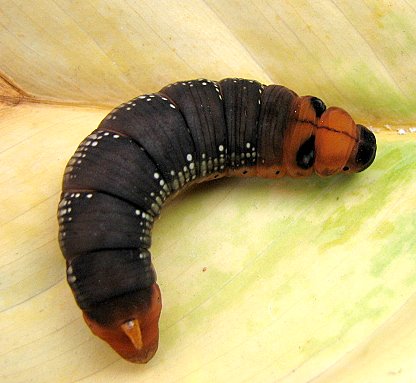
 Geetanjali had brought this caterpillar which Karthik id'd as the HAWK MOTH, and he advised Geetanjali to just release it where she had found it.
The other moths, spiders and insects we found will be in a separate post.
Geetanjali had brought this caterpillar which Karthik id'd as the HAWK MOTH, and he advised Geetanjali to just release it where she had found it.
The other moths, spiders and insects we found will be in a separate post.
 We proceeded further to the Bannerghatta Forest Area and at one point, got down from the car to do the birding on foot, because, though birding is sometimes better in the car, there were too many of us, and some of us would not be able to see the birds. Out came the cameras and binoculars, and we set off.
We soon saw an ASHY DRONGO sitting on the telegraph wires, next to his black cousin:
We proceeded further to the Bannerghatta Forest Area and at one point, got down from the car to do the birding on foot, because, though birding is sometimes better in the car, there were too many of us, and some of us would not be able to see the birds. Out came the cameras and binoculars, and we set off.
We soon saw an ASHY DRONGO sitting on the telegraph wires, next to his black cousin:
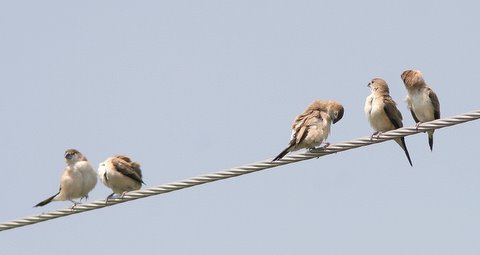
 Throughout the day, we saw flocks of SILVERBILLS and here's an example of the cute little bird:
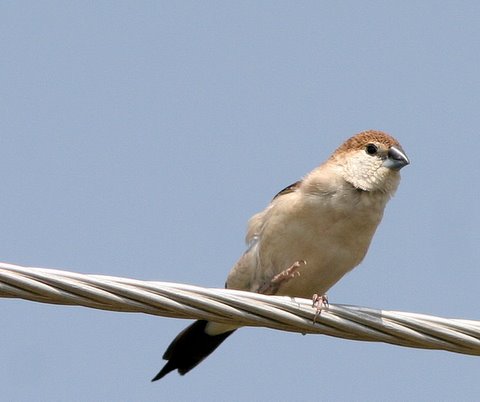 Here's a group of them...in view of what they are doing, they should be called "Preenias", perhaps!
 There were YELLOW-BILLED BABBLERS around:
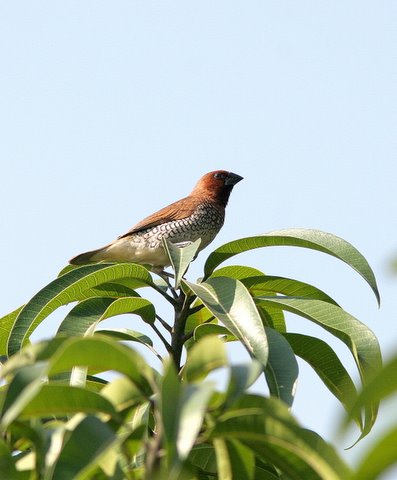
 As we went along, I snapped this SCALY-BREASTED MUNIA (also called the spotted munia) on the mango tree:
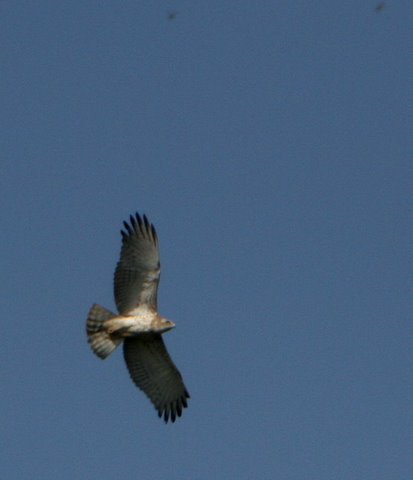
 At one point, a SHORT-TOED SNAKE EAGLE went lazily soaring overhead:
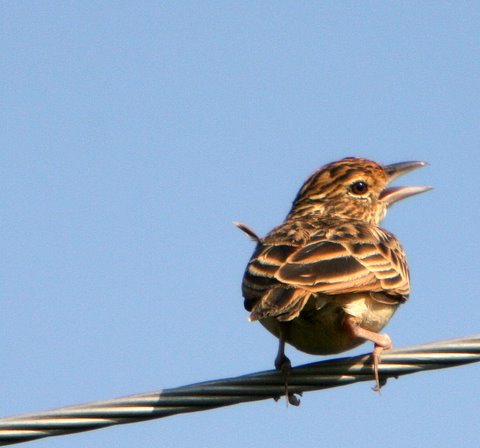
 And we also watched the tiny BUSHLARK singing...
 We saw that ashy drongo devour its food:
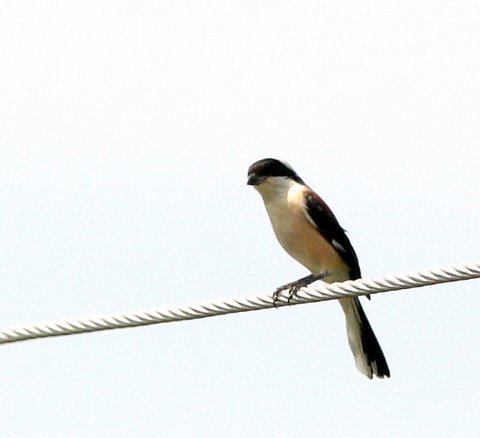
 And that put us all in mind of the fact that we should be catching our own grasshoppers, too. So we decided to go back to the restaurant at Geetanjali and Subir's residential layout, but not before we stopped once more to click this RUFOUS-BACKED SHRIKE
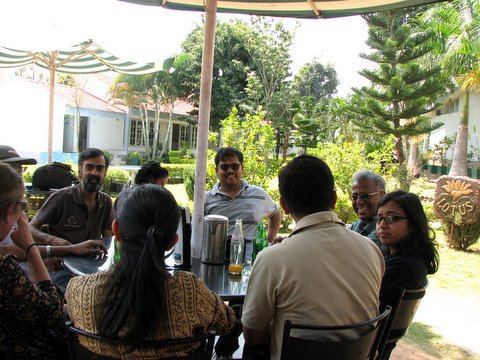
 A female ASIAN PARADISE FLYCATCHER led us a merry dance for a while, until Uma captured it on her camera (Uma, post please, asap!) and we dragged ourselves back to our breakfast, which we thoroughly enjoyed:
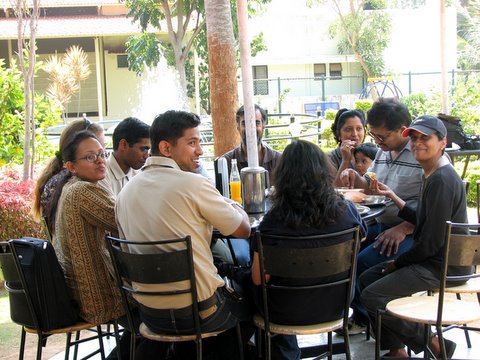 We then went to the pond area in the layout, where we watched a couple of PIED WAGTAILS:
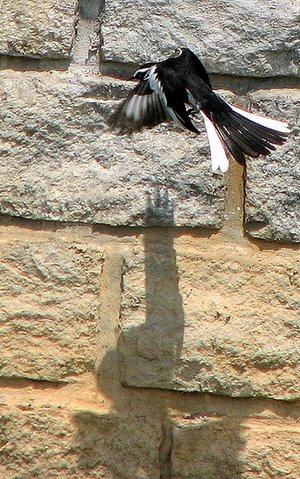 One of them mystified us with its behaviour; it ran along the edge of the wall in the picture, and seemed to just lay down, and then kept perfectly still for a very long time, only moving its head slightly (or we would have thought it had died.)
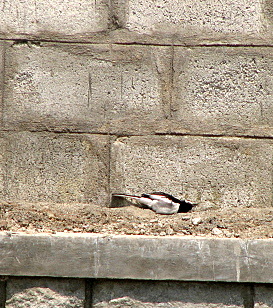 Was it sunning itself? We don't know, but surely it is most unusual for a bird to be so still for so long, in the open air.
Throughout the evening, Karthik's guidance was just fantastic! He identified everything that we asked him about, and gave a lot of information. He had also brought along a collection of really superb photographs that he and Priya had taken, and that alone would have made the whole trip worthwhile!
Karen, being a wildlife warden in Yosemite, had a lot of questions as well as a lot of information for us; she has promised that anyone who goes to Yosemite will get a birding tour!
</lj-cut>
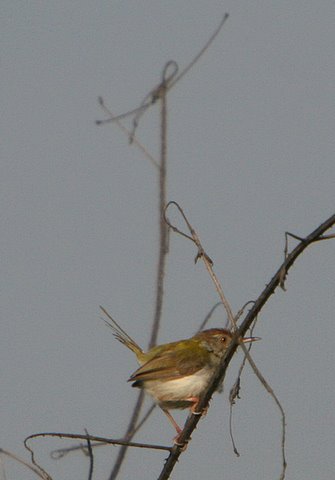
We finally dispersed, having had a wonderful morning; and I leave you with the image of a bird that I defy any birder to id properly...it was in the pond area of the residential layout!
Was it sunning itself? We don't know, but surely it is most unusual for a bird to be so still for so long, in the open air.
Throughout the evening, Karthik's guidance was just fantastic! He identified everything that we asked him about, and gave a lot of information. He had also brought along a collection of really superb photographs that he and Priya had taken, and that alone would have made the whole trip worthwhile!
Karen, being a wildlife warden in Yosemite, had a lot of questions as well as a lot of information for us; she has promised that anyone who goes to Yosemite will get a birding tour!
</lj-cut>
We finally dispersed, having had a wonderful morning; and I leave you with the image of a bird that I defy any birder to id properly...it was in the pond area of the residential layout!
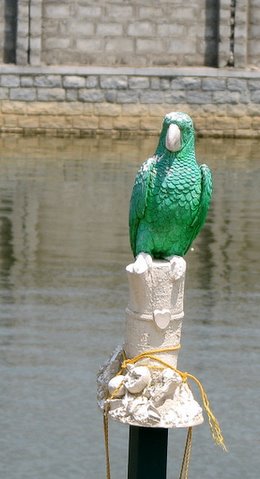 We have named it the Psittacocis concretus....
Will be posting the pictures of the beautiful denizens of the insect world that we got...later!
We have named it the Psittacocis concretus....
Will be posting the pictures of the beautiful denizens of the insect world that we got...later!